






Walk Between Worlds on Iceland’s Golden Circle
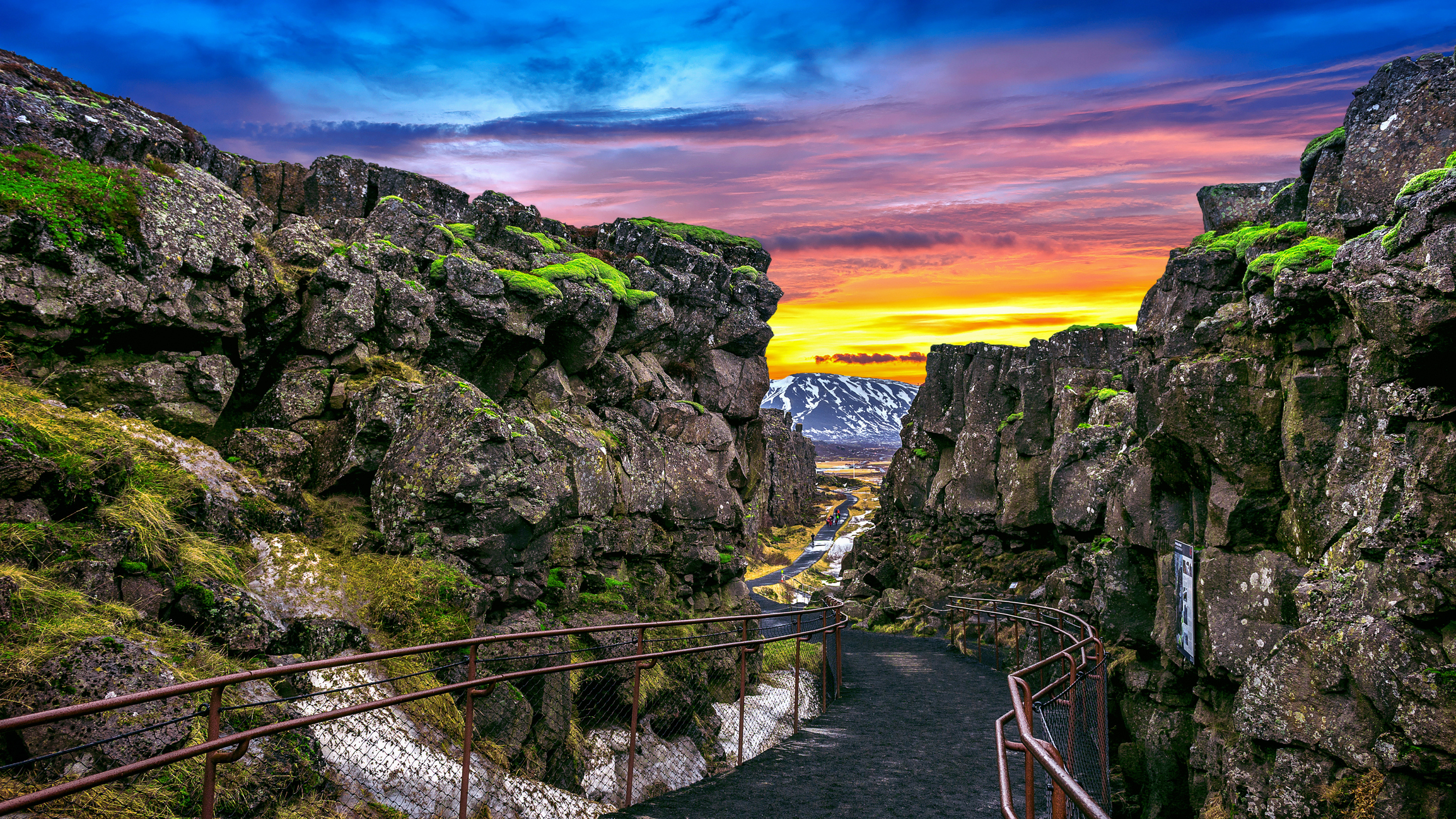
Morning light spills across the lava plain at Þingvellir as the Öxará river threads toward the falls. People once gathered at Lögberg, the Law Rock, to hear the laws spoken aloud and settle disputes in the open air. Here the island’s great assembly, the Alþingi, took root and Iceland’s early choices were made — including the turn toward Christianity — with mountains as witnesses. Walk the path today and you step between the North American and Eurasian plates, a slow parting seam that proves the ground is alive. Silfra’s water, filtered through lava and clear as glass, glows in blues and silver. Þingvellir remains a national park and a UNESCO World Heritage site, the birthplace of a nation set inside a living landscape.
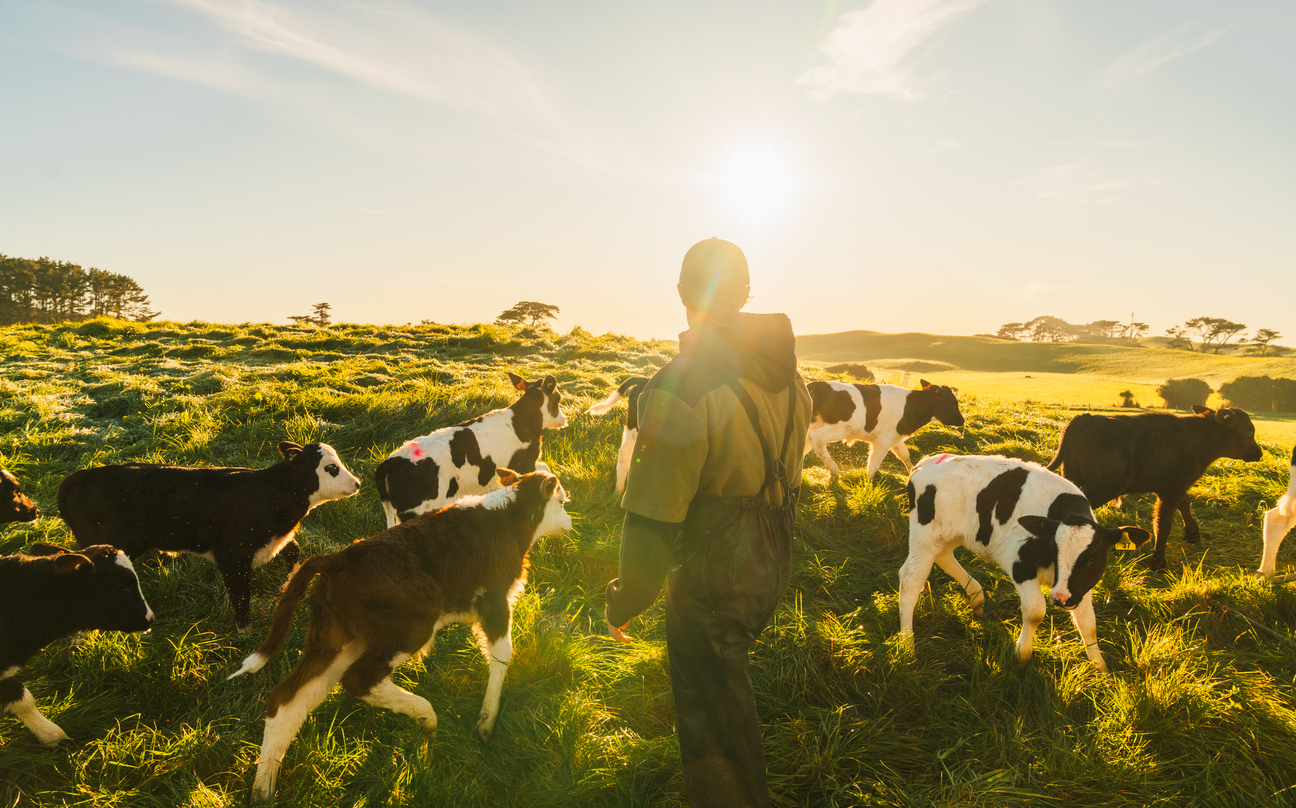
At Efstidalur dairy farm, the sweet smell of waffles and fresh cream mixes with warm hay from the cowshed below. Through big windows you can watch the herd chewing contentedly while the Ice Cream Barn serves scoops made from the farm’s own milk. Outside, fields roll toward low hills; inside, it’s all farmhouse comfort—simple soups, burgers, and skyr that taste like the place. Kids love the calves in summer, adults love the coffee with a cold cone, and everyone leaves with a little milk mustache and a big grin. A gentle, delicious pause on the Golden Circle.
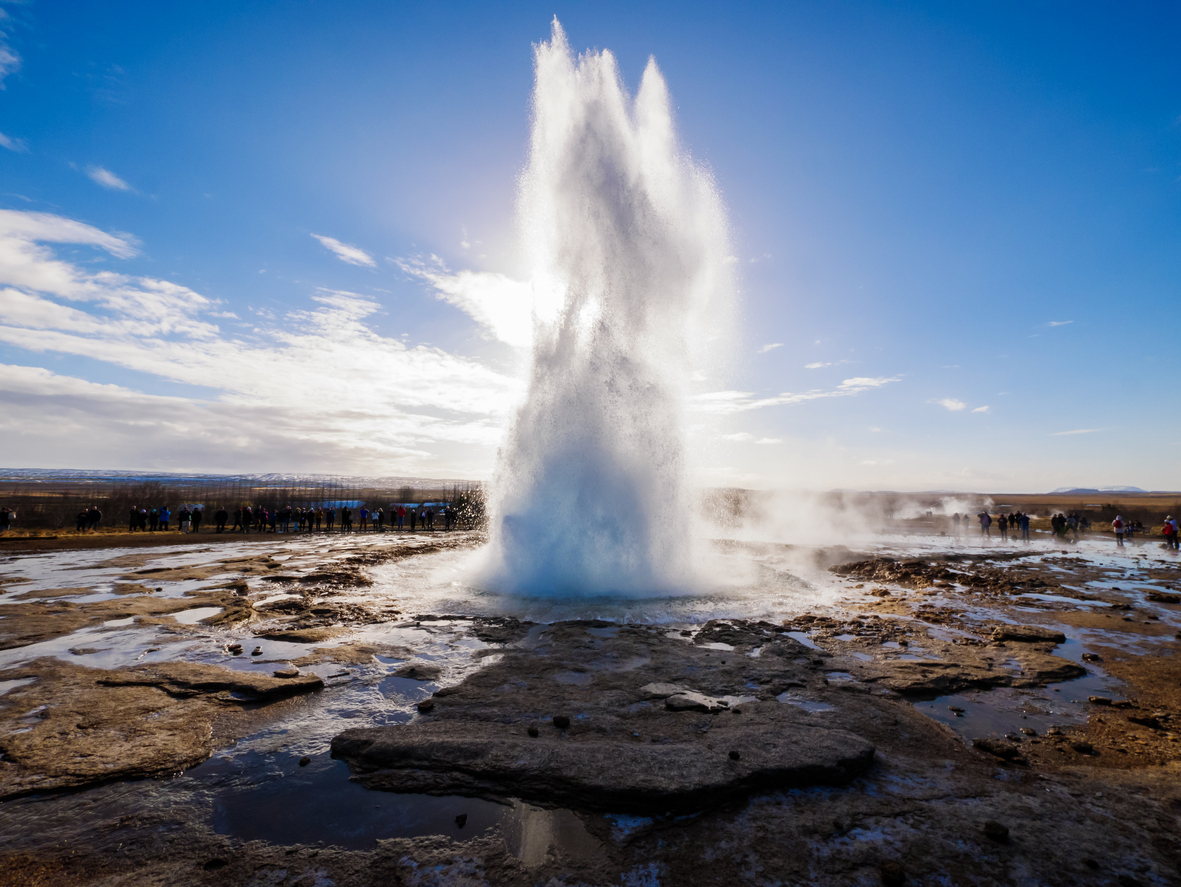
At Geysir the ground breathes. In the Haukadalur valley, steam drifts over bubbling pools while Strokkur gathers itself—glass-blue for a heartbeat—then bursts skyward in a column of hot water and cheers. The “Great Geysir” nearby once erupted so famously it gave the world the word geyser; today the whole field still hisses and whispers with heat. Walk the paths, feel the warmth underfoot, and watch the terraces shine with minerals—proof that Iceland’s fire sits just below the skin.
At Gullfoss, the glacial Hvítá River rushes over a broad shelf, gathers itself, then plunges again into a narrow canyon. Mist rises like breath and, when sun breaks through, rainbows arc across the falls. In summer the grass glows green; in winter ice rims the cliffs and the roar deepens. Stand at the rail and the name “Golden Falls” makes sense—water turned to light.
At Friðheimar the air smells of tomato leaves and warm basil. Sunlight slips through the glass while bumblebees drift from flower to flower, and vines heavy with fruit glow red against the green. You sit among the plants with a steaming bowl of tomato soup and thick, still-warm bread, dipping, tasting, looking straight into the greenhouse that grew your lunch. It’s a cozy, delicious pause on the Golden Circle, where you taste how Iceland turns light and hot water into food.
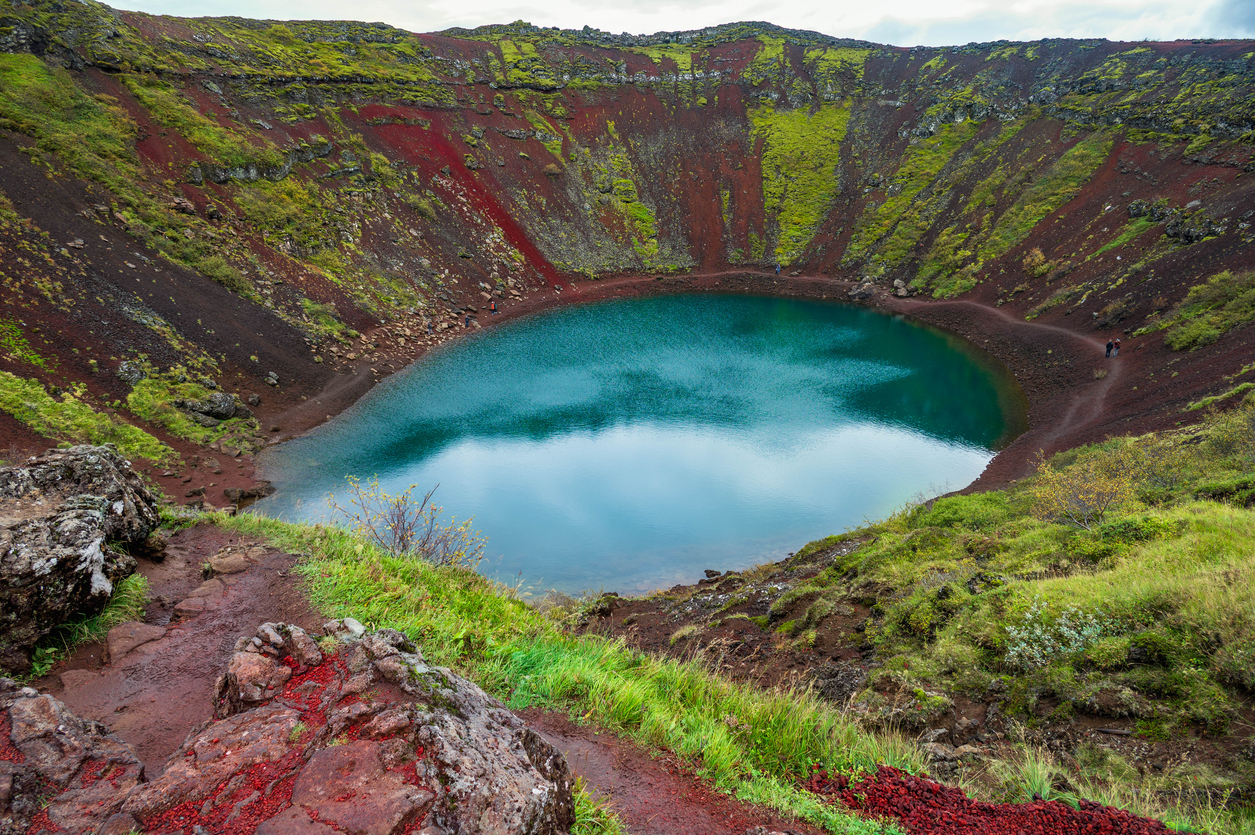
At Kerið, fire left a perfect circle and water moved in. Rust-red and orange slopes fall to a small turquoise lake that mirrors the sky. Walk the rim and the colors change with every step; follow the path down and the crater walls rise like an arena around you. Formed when a volcanic cone collapsed into its own magma chamber, Kerið feels both raw and calm—an easy, photogenic stop where Iceland’s geology shows its colors.



.svg)