




Secrets of Snæfellsnes
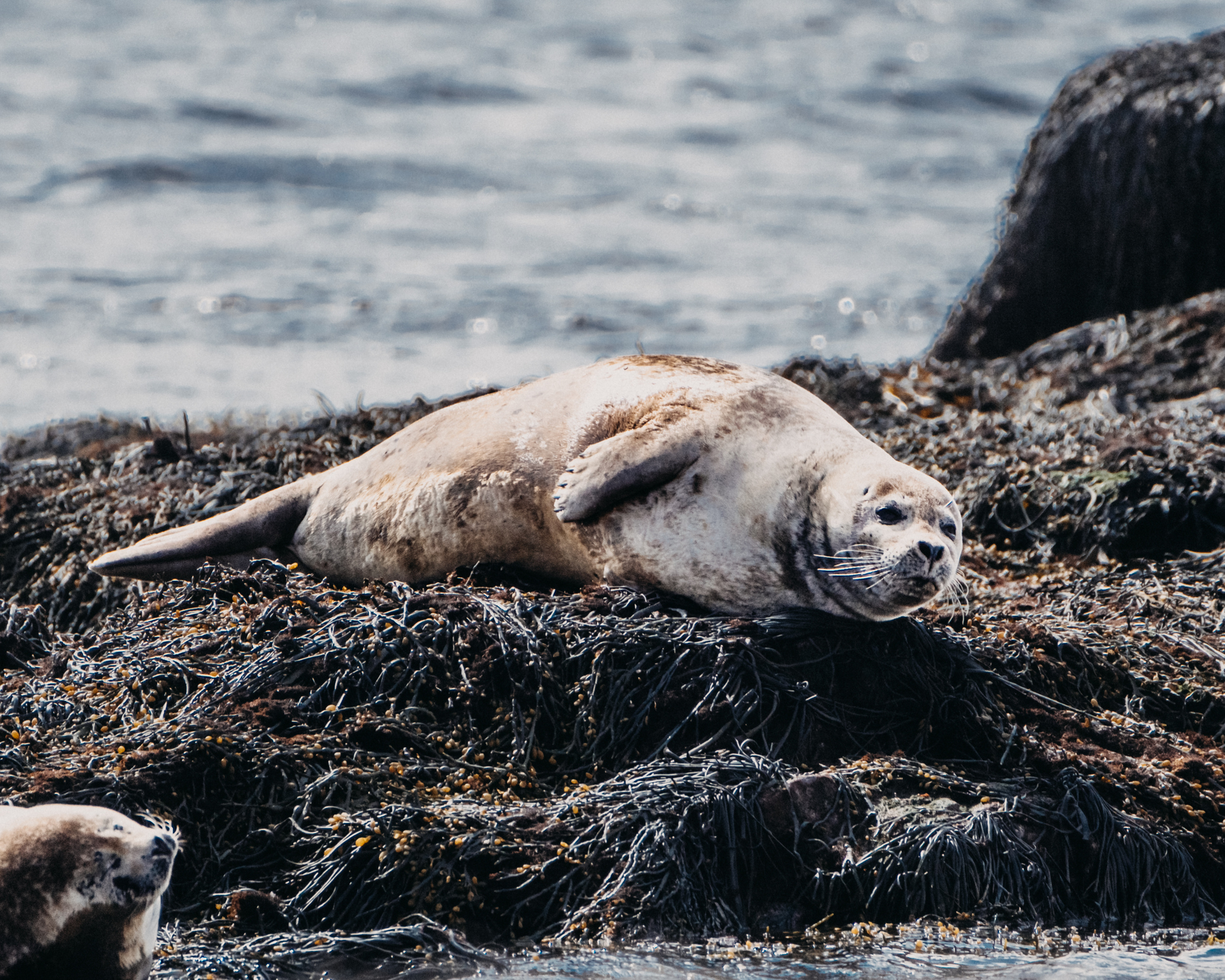
At Ytri Tunga, the sand runs honey-gold and the sea speaks in a soft hush. When the tide slips out, whiskered seals climb the flat rocks like old neighbors returning to their favorite seats, blinking at the sun and the shining shoulder of Snæfellsjökull in the distance. Local fishermen used to say the seals were keepers of luck—watch quietly and they’ll watch you back. Gulls drift overhead, kelp breathes with the swell, and for a moment the whole peninsula seems to pause. Keep your footsteps light and your distance respectful; this is their living room. Ytri Tunga isn’t just a stop—it’s a gentle greeting from Snæfellsnes itself.
Búðakirkja—the Black Church—stands like a quiet lighthouse on the lava plain, its tar-dark boards catching every change of light from the sea. On clear days Snæfellsjökull gleams behind it like a white crown; on stormy ones the little church seems to glow against the gray. Fishermen once tied their hopes here, traders passed through, and the wind still carries their whispers across the dunes. Step through the simple door and the world softens: bare timber, a humble altar, a bell that has called people together for generations. Outside, grass bends, seabirds turn, and the Atlantic breathes in and out. It’s small, yes—but it holds the whole peninsula’s mood: rugged, faithful, and beautifully spare.
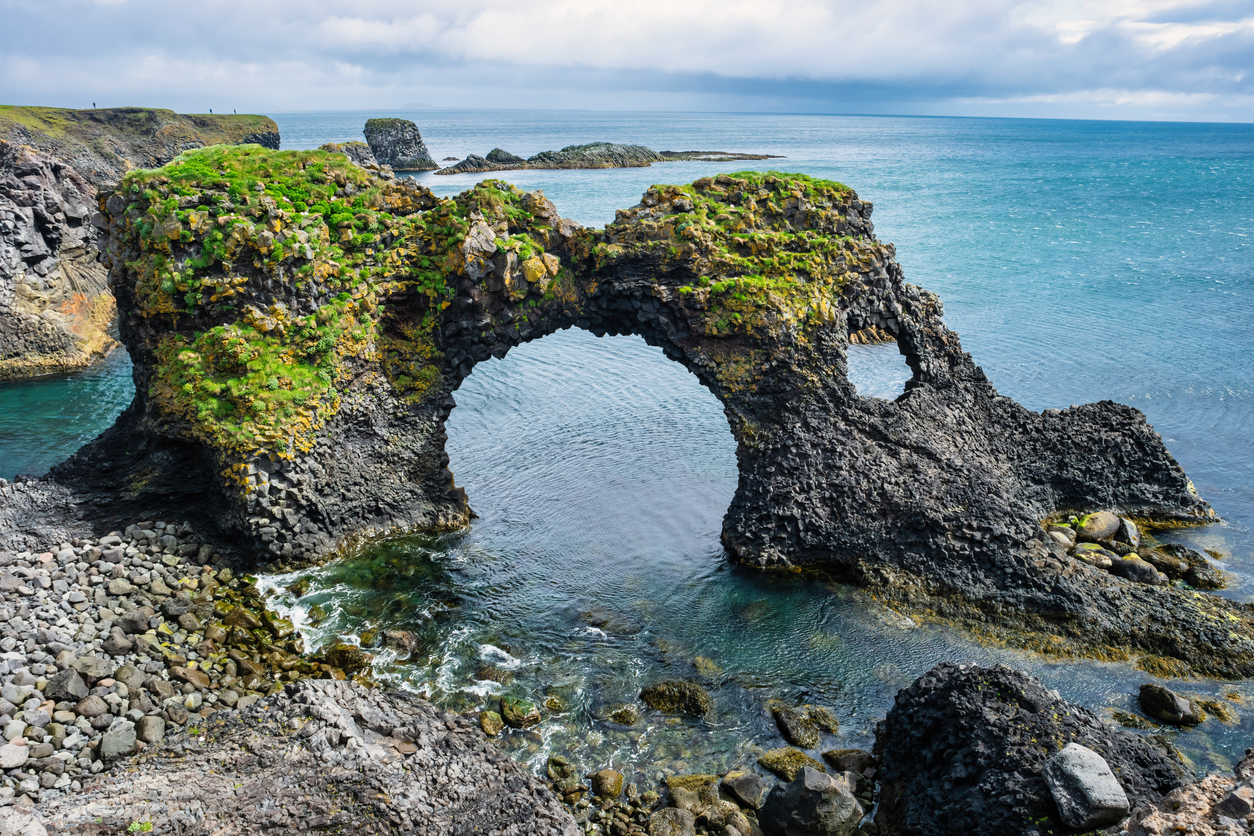
Arnarstapi sits at the edge of the lava and the Atlantic, where cliffs of basalt drop into froth and seabirds ride the wind. A stone arch—Gatklettur—frames the restless sea, and the path along the headland leads past blowholes, caves, and neat stacks of rock like organ pipes. Fishermen once launched from the snug little harbor; today it’s the cries of kittiwakes and fulmars that fill the air. Locals speak of Bárður Snæfellsás, the guardian spirit of the peninsula, whose presence lingers in the quiet between waves. Walk slowly, keep to the trail, and let the salt air do the talking. On bright days the water glows blue through the arch; on gray ones, the cliffs seem to breathe with the swell. Arnarstapi is a meeting of stories—stone, sea, and the people who have lived between them.
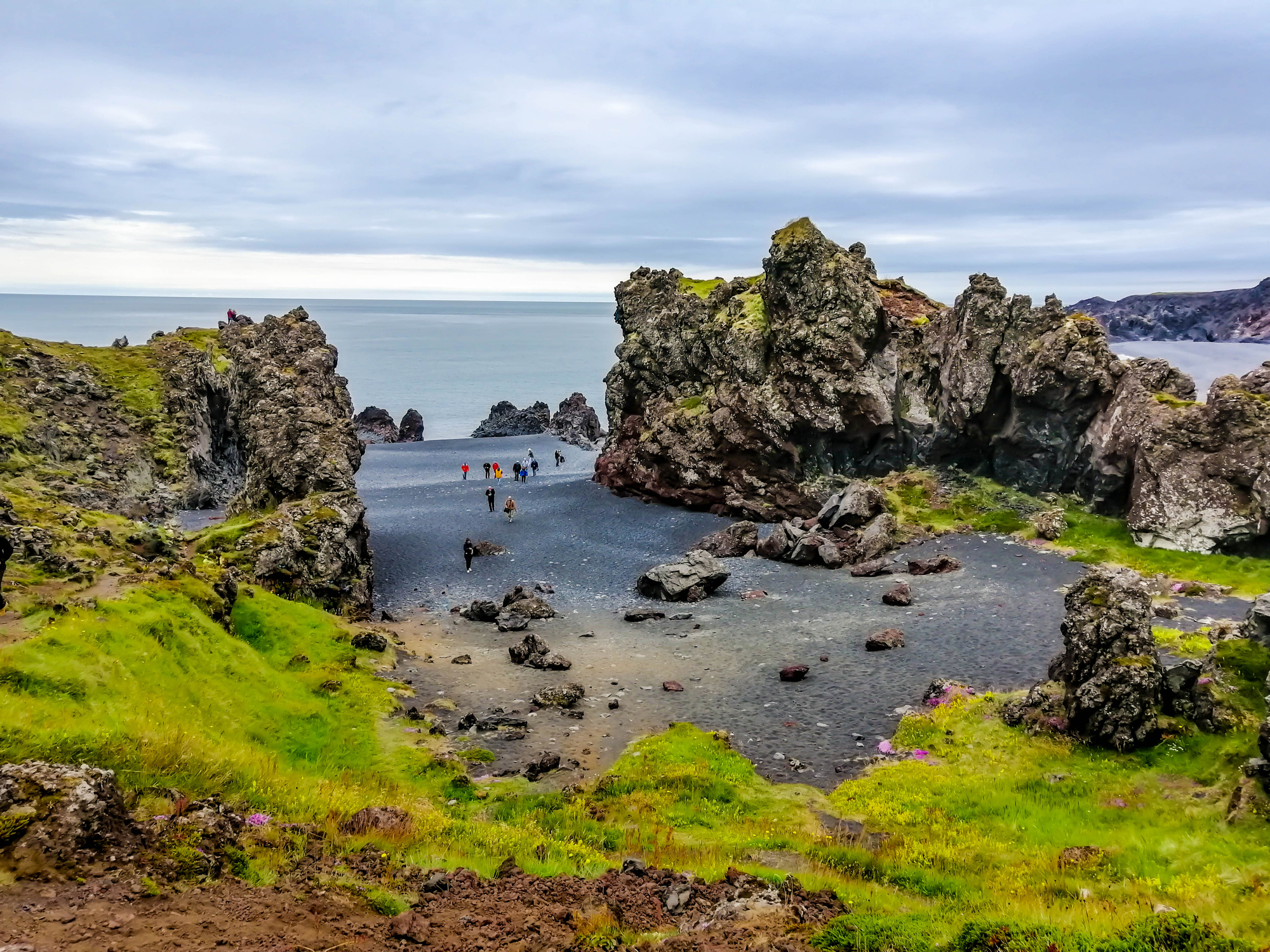
Djúpalónssandur is a cove of black, wave-polished pebbles that sound like rain when the tide turns. Sea arches bite at the surf, and the rusted ribs of an old trawler lie scattered in the stones like a warning from another century. On the path above the beach, four squat lifting stones wait—the old test of a fisherman’s strength—and the glacier keeps watch from inland, white against the lava. Walk slowly; let the wind carry the salt and the gulls’ calls. Keep a respectful distance from the water—here the Atlantic moves with sudden power. Djúpalónssandur is not a place to rush; it’s a place to feel the peninsula breathing.
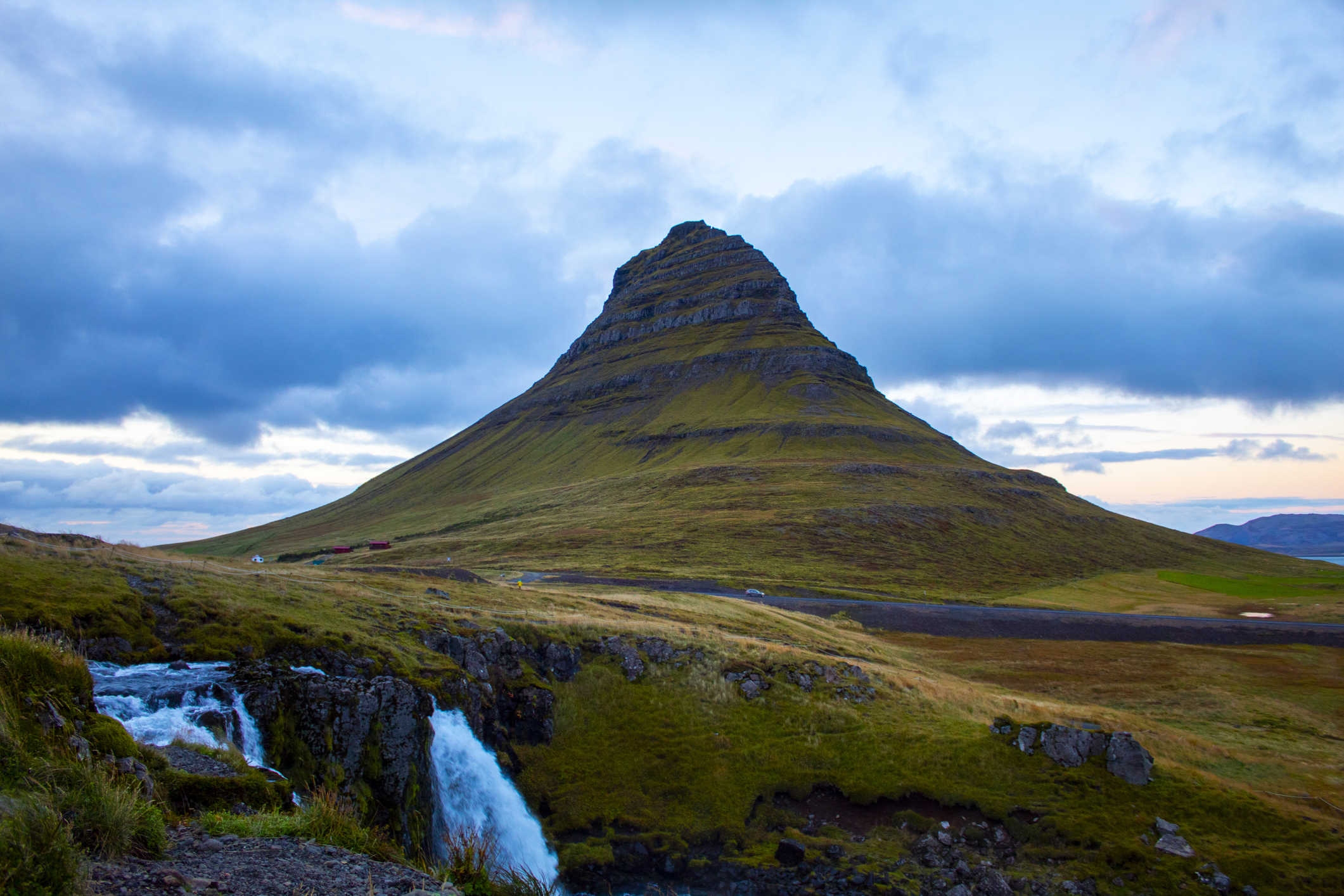
Kirkjufell rises like an arrowhead above Grundarfjörður, a perfect shape that seems drawn rather than carved. On calm days it doubles itself in the water; on windy ones it wears a scarf of cloud. Just across the road, Kirkjufellsfoss tumbles in white steps, framing the mountain in that famous view—glacier light behind, sea air ahead. In summer, the moss glows late into the midnight sun; in winter, the northern lights stitch green threads over its silhouette. Stand still for a moment and you’ll hear the hush of the falls, the quiet of the fjord, and the slow patience of stone. Kirkjufell isn’t just a photo stop—it’s a landmark that teaches you to look longer.
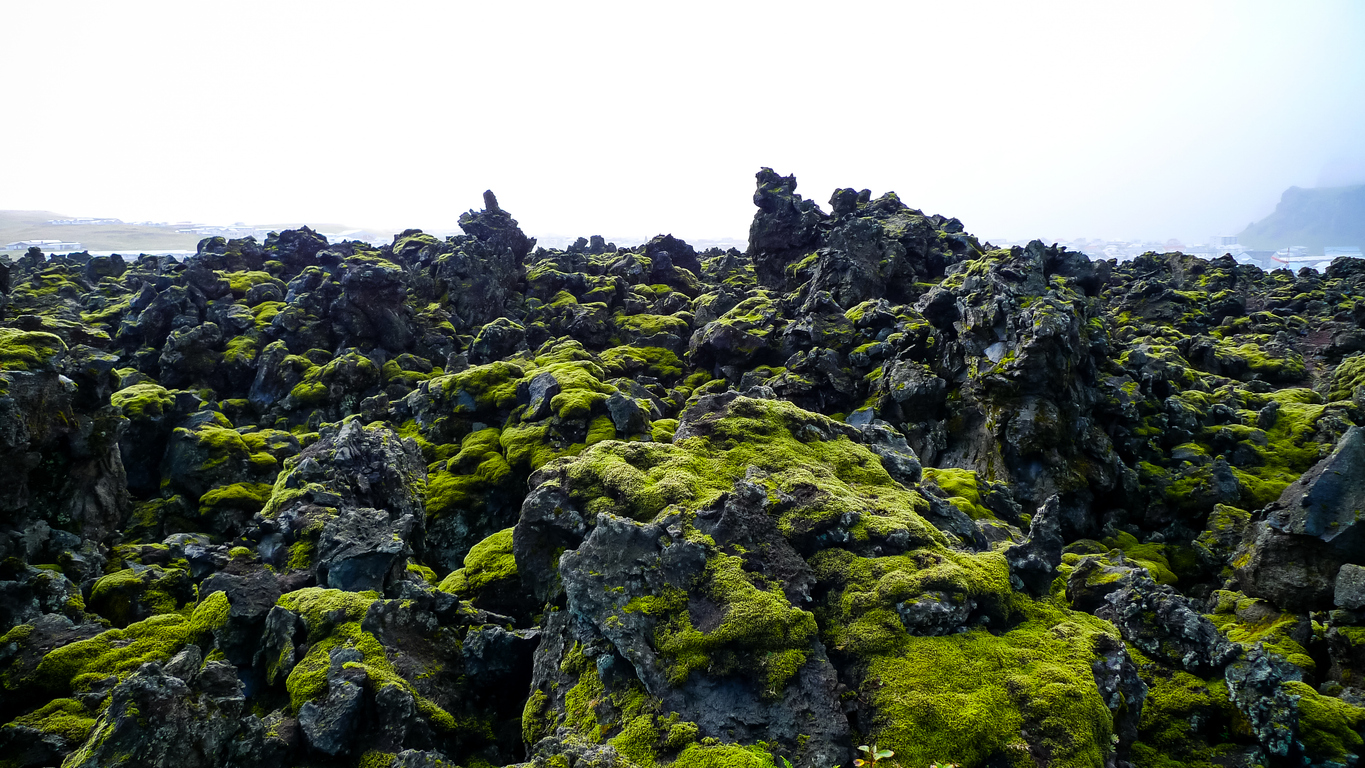
Berserkjahraun is a maze of moss-soft green draped over frozen waves of black lava—quiet, eerie, and beautiful. Threads of red scoria peek through like embers gone cold, and an old stone causeway cuts across the field, known in local legend as the Berserkers’ path. The story says two fierce warriors carved a way through this rough lava to win a marriage promise… and met a grim fate when the deal turned dark. Walk the marked trail, listen to the wind snag on the lava ridges, and feel how recent this landscape still seems—like the earth cooled yesterday. Step carefully and keep off the moss; it takes decades to heal. In Berserkjahraun, the ground remembers both fire and folklore.



.svg)