Driving in Iceland — A Complete, No‑Stress Guide
Iceland’s roads take you from city streets to lava deserts, fjords, glaciers, and mossy highlands. This guide covers everything you need to plan a safe, smooth self‑drive: rules and road types, seasonal advice, insurance and vehicle choices, etiquette on bridges and roundabouts, winter tips, packing lists, and route ideas. No hype—just what actually helps behind the wheel.
The Basics You Should Know First
- Headlights on, always. Day and night, summer or winter.
- Seat belts for everyone. Child seats required by size/age; kids may not ride on laps.
- No right turn on red. Wait for green.
- Speed limits (typical): 50 km/h in towns; 80 km/h on rural gravel; 90 km/h on paved rural roads. Drive to conditions—wind, rain, or gravel often means slower.
- Zero tolerance mindset for alcohol. Iceland’s legal limit is very low; plan as if it’s zero.
- Phones hands‑free only. No texting while driving.
Road Types and What They Mean
- Ring Road (Route 1): Paved, circles the island. Expect single‑lane bridges and frequent wind zones.
- Gravel roads: Common in the Westfjords and interior approaches. Lower speed, longer braking distances, and stone‑chip risk.
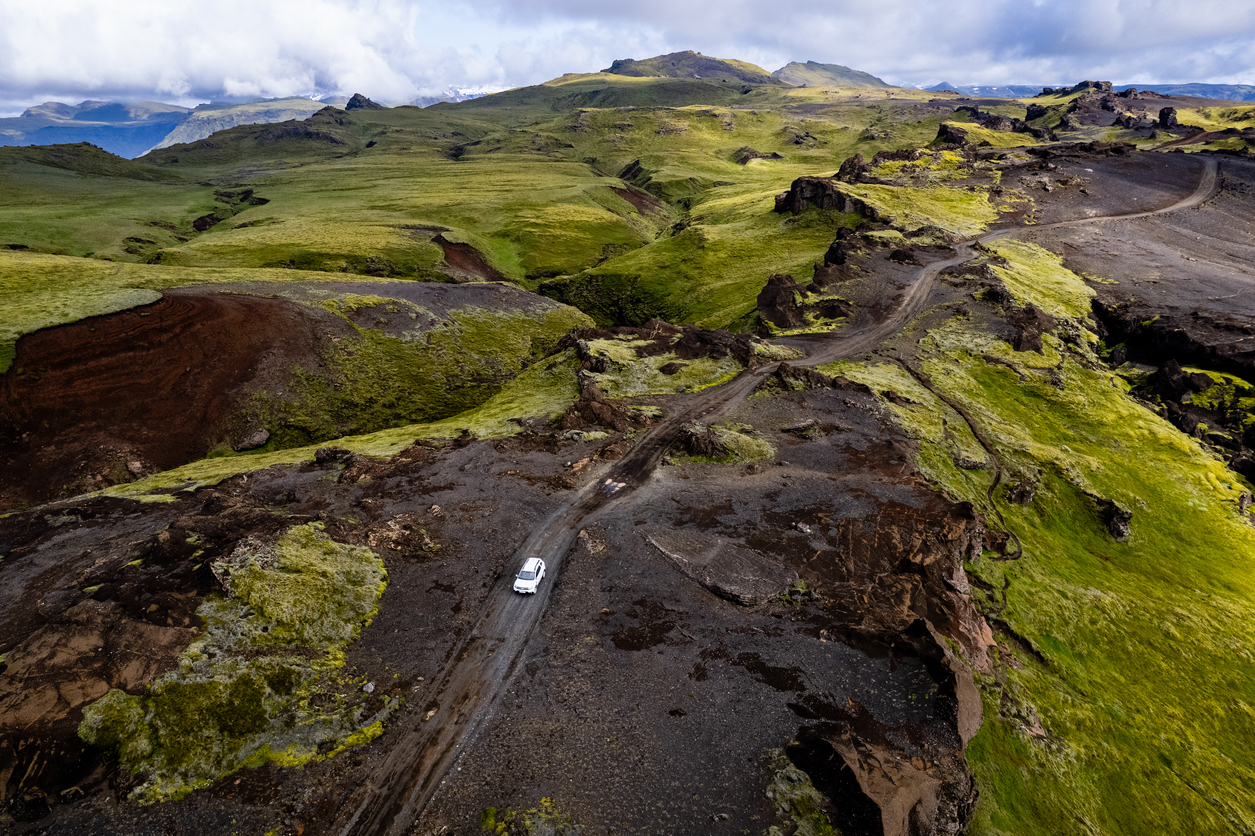
- F‑roads (mountain/Highlands): Rough tracks, river crossings, open only in summer. 4×4 required and experience strongly recommended. No rental sedans here.
- Single‑lane bridges & tunnels: Very common outside Reykjavík. The first driver to reach the bridge has priority if signage doesn’t dictate otherwise; slow, yield early, and be courteous. In one‑lane tunnels, obey posted yield bays.
Roundabouts and City Etiquette
- Two‑lane roundabouts: The inner lane usually has priority when exiting. Choose lane early; signal clearly; never cut across another vehicle.
- Pedestrians & bikes: Expect zebra crossings in towns—slow and yield.
- Parking in Reykjavík: Color‑coded paid zones in the center; use apps or meters. Don’t block driveways or sidewalks.
Weather, Wind, and Visibility
- Wind is the boss. Gusts can exceed 20–30 m/s; at those speeds, high vehicles and roof boxes become risky. Open doors with two hands into the wind and hold tight—door damage is common.
- Rapid changes: Sun, sleet, fog, and rainbow can happen in an hour. If visibility drops, slow down and use low beams (never fog lights to blind others).
- Check before you go: Road conditions and closures, weather alerts, and wind warnings should be part of every morning plan.
Summer vs. Winter Driving
Summer (May–September)
- Midnight sun means long driving windows; fatigue can sneak up—schedule real rests.
- Gravel and sheep on roads are bigger risks than ice. Expect dust and flying stones behind oncoming traffic.
Winter (October–April)
- Ice, snow, and whiteouts are real. If you’re inexperienced, favor guided tours or very short drives.
- Studded or winter tires are standard on rentals in season. Keep speeds gentle, inputs smooth, and distances long.
- Black ice forms near rivers and shaded cuts even above freezing. If you skid, steer gently where you want to go and avoid braking hard.
Vehicle Choice and Insurance
- 2WD compact: Fine for Ring Road in summer and paved/gravel spurs in good weather.
- AWD/4×4: Better stability in wind and on gravel; essential for F‑roads and many winter itineraries.
- Clearance vs. comfort: Highlands demand clearance more than horsepower; for cities and main sights, comfort and cargo space often matter more.
- Insurance that actually helps:
- Gravel protection for chipped paint and windscreens.
- Sand/ash protection in the south during wind events.
- Zero‑excess or reduced excess for door dings and underbody damage. Read exclusions: river crossings and F‑roads may be excluded unless specified.
Fuel, Charging, and Range
- Fuel: Distances are long and stations sparse in the Westfjords and north. Top up when you can. Many pumps are unmanned—bring a card with PIN.
- Charging (EVs): DC fast chargers exist on main corridors but plan legs conservatively in winter. Always have the provider’s app or RFID set up before you leave town. Pre‑heat the cabin while plugged in.
- Diesel vs. petrol: Don’t mix—yellow vs. green handles vary by station; double‑check labels.
Navigation and Must‑Have Apps
- Road conditions & closures: Road.is
- Weather & wind: Vedur.is
- Travel alerts & safety tips: SafeTravel.is
- Emergency: 112 app and phone number 112 (works across Iceland). Share your travel plan if venturing into remote areas.
- Maps: Offline maps on your phone as backup; don’t rely on a single device.
Gravel, Sheep, and Photo Stops
- Gravel transitions: Slow before the transition to avoid a skid. Keep both hands on the wheel, eyes far ahead.
- Oncoming vehicles: Pull slightly right and lift off the throttle to reduce stone strikes.
- Sheep have right of way—practically. Ewes cross, lambs follow unpredictably. Ease off early and pass wide.
- Photo pull‑outs: Use marked lay‑bys. Never stop on blind hills or in the roadway for a photo.
What to Pack in the Car
- Warm layers, hat, gloves—even in July
- Waterproof jacket and boots
- Sunglasses for low, bright sun and snow glare
- Phone charger and power bank
- Reflective vest and basic first‑aid kit
- Snacks and water; thermos in winter
- Ice scraper, microfiber cloths, and a small shovel in winter
If Things Go Wrong
- Breakdown or puncture: Pull into a safe lay‑by; place hazard lights and triangle if available. Call your rental’s roadside number; use 112 only for emergencies.
- Whiteout or impassable road: Turn back to a safe town or guesthouse; do not continue into worsening conditions.
- River crossings (F‑roads): Walk first, cross diagonally downstream at the slowest current, and never attempt alone or in a non‑approved vehicle. If unsure, don’t cross.
Suggested Self‑Drive Ideas
Golden Circle from Reykjavík
- Easy year‑round; paved; classic sights (Þingvellir, Geysir, Gullfoss, Kerið). Start early to avoid crowds and strong afternoon winds.
South Coast highlights
- Waterfalls like Seljalandsfoss and Skógafoss, black‑sand beaches, glacier views. Watch wind forecasts near cliffs and open plains.
Snæfellsnes Peninsula
- A micro‑Iceland: craters, cliffs, fishing villages, lava fields. Several gravel sections; slow for views and wildlife.
Ring Road loop
- Allow a week or more to enjoy it. Add time for Eastfjords detours and weather buffers, especially in winter.
Local Courtesy and Common Sense
- Wave thanks when someone lets you pass on a narrow lane.
- Leave gates as you found them on farm tracks that are public rights of way.
- Respect closures and “no off‑road” rules—tire ruts scar fragile moss for decades.
- Use toilets at fuel stations and attractions; pack out tissues in remote areas.



.svg)