Northern Lights in Iceland — Complete Guide (No-Nonsense, All You Need)
The aurora borealis is Iceland’s most magical show, but it isn’t random luck. With the right expectations and a simple plan, your chances soar. This guide covers what the lights are, the best season and times, where to go (from Reykjavík to remote fjords), how to read forecasts, photography tips for phones and cameras, safety, etiquette, and quick itineraries.
What the Northern Lights Are (Quick Science)
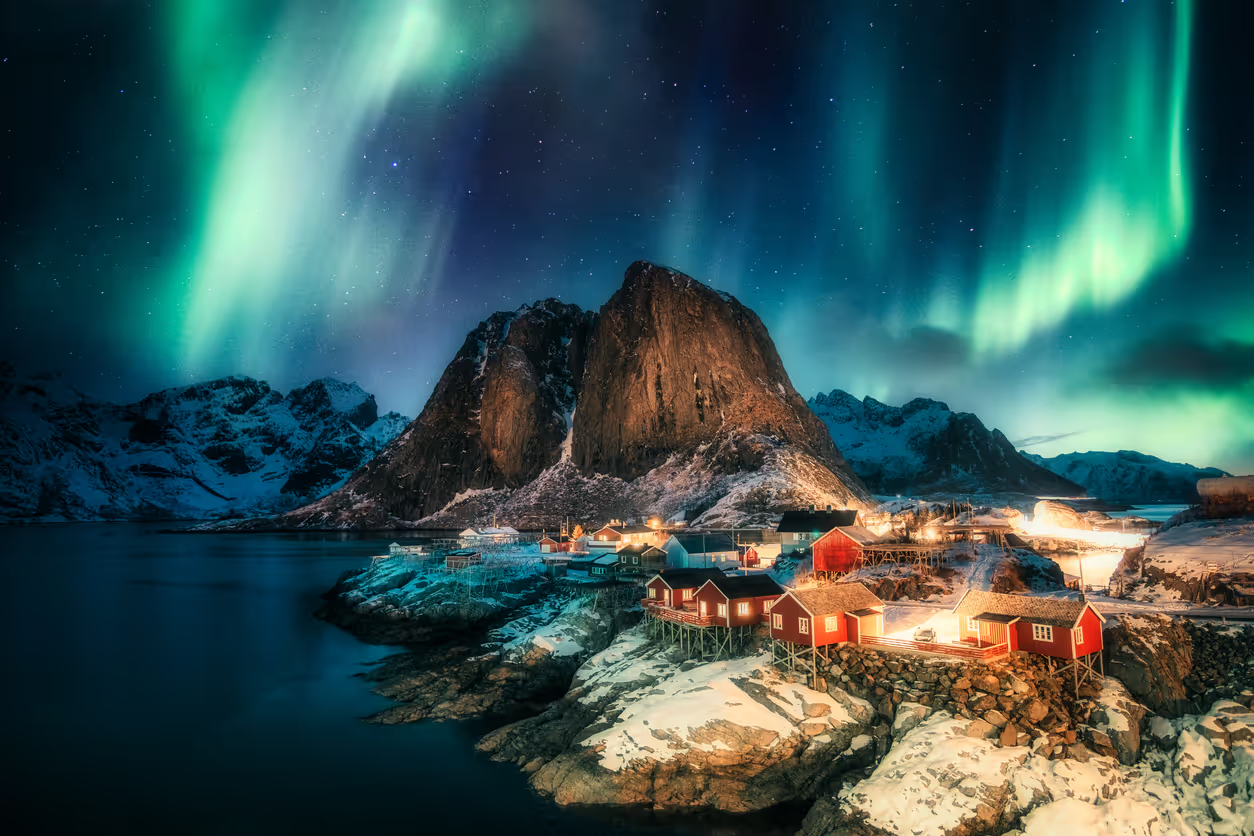
Charged particles from the sun stream toward Earth and interact with our magnetic field and atmosphere. When oxygen and nitrogen atoms get excited and then relax, they release light:
- Green (most common) from oxygen ~100–150 km up.
- Purple/pink edges from nitrogen.
- Red at very high altitude during strong solar activity.
Displays can drift like curtains, form arcs, pulse, or explode into fast “coronas.”
When You Can See Them
- Season: Roughly mid‑August to mid‑April (when nights are dark). Best odds September–March.
- Time of night: Peak window is 21:00–02:00 (can happen earlier/later).
- Moon: Bright moonlight doesn’t “block” aurora, but it reduces contrast. If the forecast looks good, go anyway—moonlight can beautifully light your foreground.
- Weather first, not Kp first: Clear (or partly clear) skies beat a high Kp under thick cloud every time.
The “Aurora Triangle”: 3 Things You Need
- Darkness (away from city lights)
- Clear-ish skies (holes are enough)
- Some solar activity (even Kp 2–3 can be great in Iceland)
If one corner is missing, try changing location or time.
Reading the Forecasts (Simple Workflow)
- Cloud cover: Open Iceland’s cloud map and find clear or partly clear areas for the evening.
- Aurora activity: Check the short-term aurora forecast (Kp index and auroral oval). Treat Kp as a tie‑breaker after clouds.
- Wind & roads: Strong winds and icy roads change the plan—check road conditions, wind warnings, and consider a guided tour if conditions are marginal.
- Pick 2–3 backup spots in different directions so you can pivot if clouds move in.
(Pro tip: The sky can clear fast. If you see stars in patches, stay a bit—aurora can pop in minutes.)
Where to Watch: Reykjavík Area and Beyond
Close to Reykjavík (great for short chases):
- Grótta Lighthouse (Seltjarnarnes): Easy, dark horizon over Faxaflói Bay; mind tides and wind.
- Þingvellir National Park: Broad northern sky, reflective ponds, minimal light pollution.
- Mosfellsheiði or Kjalarnes lay‑bys: Quick escapes from city glow.
- Reykjanes Peninsula: Lava plains, lighthouses, hot‑spring steam for dramatic foregrounds.
South Coast classics:
- Vík & Dyrhólaey headland: Sea arches and cliffs (watch wind and sneaker waves).
- Jökulsárlón Glacier Lagoon & Diamond Beach: Mirror‑smooth lagoon and glittering ice on black sand—arguably Iceland’s most photogenic aurora stage.
West & North:
- Snæfellsnes Peninsula: Arnarstapi, Kirkjufell, and windswept lava fields with big northern horizons.
- Akureyri & Lake Mývatn: Drier climate odds; lava pillars and pseudocraters for foregrounds.
- Tjörnes & Húsavík: Wide sea views; bring a wind layer.
Remote & epic (more driving, bigger rewards):
- Látrabjarg (Westfjords) and Eastfjords pull‑outs: Vast darkness, but winter driving can be serious—check conditions.
Tours vs. Self‑Drive
- Self‑drive: Maximum flexibility; best if you’re confident with winter roads. Choose short hops from town on windy/icy nights.
- Guided tours: Local experts read weather, pick micro‑climates, and handle the driving. Good if you’re short on time, new to Iceland conditions, or want photo help. Small groups or super‑jeeps can reach quieter spots.
Photography Tips (Phone & Camera)
Phones (iOS/Android):
- Use Night mode / long exposure. Lock focus at infinity if possible; tap a distant light or star.
- Reduce exposure if the sky washes out; try 3–10 seconds handheld against a rock or use a mini‑tripod.
- Shoot RAW if your app allows; keep ISO moderate to avoid noise.
Mirrorless/DSLR (starting point):
- Lens: Wide and fast (14–24 mm, f/1.4–f/2.8).
- Settings: ISO 1600–6400, shutter 1–10 s (faster—1–3 s—when aurora is fast and bright), manual focus on a distant star.
- White balance: 3500–4000K as a neutral start.
- Tripod + remote (or 2‑sec timer). Shield the camera from wind; turn off lens stabilization on a tripod.
- Compose with foreground (ice, rocks, church, lighthouse) and keep the northern sky open.
Keep gear alive: Spare batteries in an inside pocket; wipe lenses with a microfiber cloth; use a rain cover in sleet.
Safety, Weather & Road Sense
- Wind doors carefully: Hold doors with two hands; wind can bend hinges.
- Never stop on the roadway. Use marked lay‑bys; turn off headlights only when safely parked, and use parking lights so others see you.
- Sneaker waves: At beaches like Reynisfjara/Diamond Beach, never turn your back to the sea. Keep distance from the waterline at night.
- Icy roads & black ice: Slow inputs, longer distances. If you’re tired or the forecast turns, turn back—the lights will come again.
- Emergency: Call 112; share a travel plan if heading remote; carry warm layers, reflective vest, and a charged phone.
What to Wear & Bring
Windproof/waterproof shell • insulated mid‑layer • thermal base layer • warm hat & gloves (liners + shell) • winter boots • hand warmers • headlamp with red mode • tripod or phone clamp • microfiber cloths • thermos with hot drink • snacks • spare batteries/power bank.
Expectations & Etiquette
- Not guaranteed. Some nights are quiet; patience wins. Give it at least 2–3 nights if you can.
- Keep space & quiet: Share viewpoints; avoid bright torches in others’ frames.
- No drones over crowds or protected areas; check local rules.
- Leave no trace: Pack out litter, respect fences and private land.
Quick Night Plans (Pick One)
Reykjavík Short Chase (3–4 hrs): Check clouds → Grótta → if cloudy, pivot to Þingvellir or Reykjanes → hot chocolate reward.
South‑Coast Overnight: Sunset at Vík → aurora at Dyrhólaey/Reynisfjara pull‑outs (safe distance) → dawn at Skógafoss.
Snæfellsnes Loop: Sunset at Arnarstapi → night at Kirkjufell viewpoint → return via Berserkjahraun lava fields.
FAQ
Can I see them in summer? Nights are too bright (mid‑May to early August). Occasional late‑August shows restart the season.
What Kp do I need? In Iceland, Kp 2–3 can be excellent if skies are clear; higher Kp helps if you’re under thin cloud or closer to city lights.
What color will I see? Often pale green to the eye (our night vision is less color‑sensitive). Cameras render stronger color.
How long do displays last? Anything from a few minutes to several hours with waves that come and go.
Will moonlight ruin it? No—just reduces contrast. Use the moon to light your landscape.


.svg)