Ultimate Puffin Guide: When, Where, and How to See Puffins in Iceland
Puffins are Iceland’s most beloved seabirds—colorful, curious, and surprisingly fast on the wing. This guide covers everything you need: the best season and times of day, the top places around Iceland to watch them (from safe boardwalks to epic sea cliffs), photography tips, ethical viewing guidelines, and fun facts to share with your guests.
Quick Intro: Meet the Atlantic Puffin
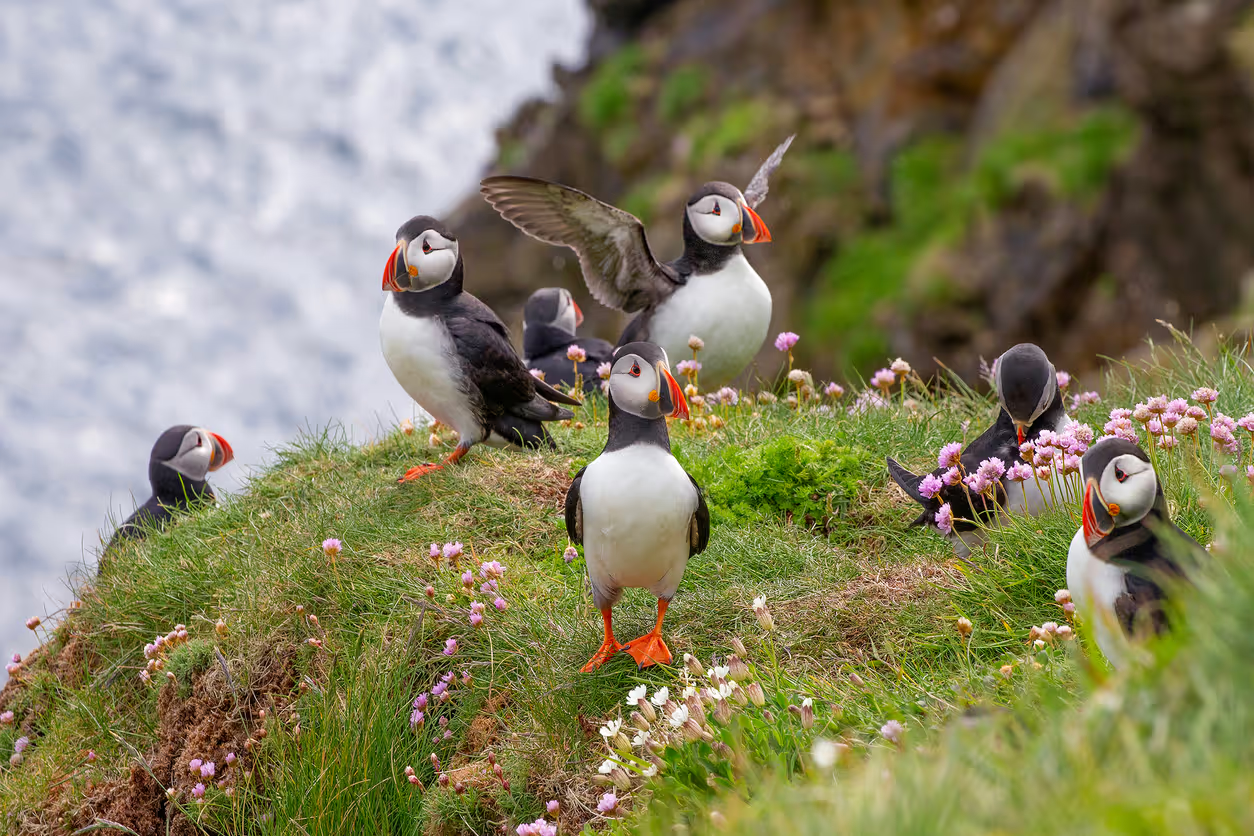
The Atlantic puffin (Fratercula arctica) spends most of the year far out at sea and only returns to land to breed. In summer, their bills glow in bright orange and red; in winter, the outer bill plates shed and the face turns darker. Puffins nest in burrows on grassy clifftops, often returning to the same mate and burrow year after year. Chicks are nicknamed “pufflings.”
When to See Puffins
- Season: Late April/May to late August (sometimes into early September, depending on location and food supply).
- Daily rhythm: Puffins are often out fishing mid‑day. Your best window to see lots of birds on land is early morning or late afternoon to evening when adults swap incubation/feeding duties and raft on the water below the cliffs.
- Weather: Overcast or light drizzle is fine and often better for photos than harsh sun. Strong winds can keep birds low or offshore—check the forecast.
Where to See Puffins in Iceland
Westman Islands (Vestmannaeyjar, South Coast)
Iceland’s puffin capital, with the country’s largest colony. Base yourself on Heimaey: visit Stórhöfði headland for viewing shelters, and watch for evening “puffling rescue” season in late August when locals help fledglings reach the sea.
How to get there: Year‑round ferry Herjólfur from Landeyjahöfn (summer) or Þorlákshöfn (if seas/weather require). Day trips are possible; an overnight gives you sunset and sunrise light.
Látrabjarg Cliffs (Westfjords)
Europe’s largest bird cliffs and one of the best close‑up puffin experiences anywhere. Birds nest right at the cliff edge, allowing safe, near‑eye‑level viewing from grassy tops. Long summer days make this a dream for golden‑hour photography.
How to get there: Remote drive to the far west of the Westfjords near Breiđavík/Patreksfjörður. Roads are partly gravel—allow extra time and drive carefully.
Borgarfjörður Eystri – Hafnarhólmi (Eastfjords)
Perhaps the easiest and safest puffin viewing in Iceland thanks to wooden boardwalks and shelters placed beside the colony. Fantastic for families and for getting clean portraits without disturbing burrows.
How to get there: Detour from the Ring Road to Bakkagerði village; the viewing area is at the small harbour Hafnarhólmi.
Dyrhólaey & Reynisfjall (South Coast)
Dramatic sea‑arch headland and basalt cliffs near Vík. Puffins nest on the grassy tops and cliff ledges. Note that access on Dyrhólaey may be restricted in May–late June to protect nesting birds; daytime access usually remains via marked paths when open.
How to get there: Just off Route 1 near Vík; steep gravel road to the upper lighthouse lot—use lower lot if conditions are windy/wet.
Reykjavík Puffin Islands – Lundey & Akurey (Faxaflói Bay)
The most accessible option if you’re based in the capital. Short boat trips from the Old Harbour reach small nesting islets packed with puffins and other seabirds. Great add‑on to a whale‑watching combo.
How to get there: Multiple tour operators run puffin boats April–August; trips take 1–2 hours.
North Iceland Options
- Tjörnes Peninsula (near Húsavík): roadside pull‑offs for cliff viewing—bring binoculars.
- Grímsey Island (Arctic Circle): superb colonies and unique “cross the circle” bragging rights. Short flights from Akureyri (seasonal) or ferry from Dalvík.
- Drangey & Vigur Islands: Guided boat trips in summer with excellent seabird diversity alongside puffins.
How to Watch Puffins Ethically (and Safely)
- Stay on marked paths and behind ropes. Puffin burrows can collapse underfoot; falling soil can trap birds and chicks.
- Give space. If a puffin is staring at you and won’t approach its burrow, you’re too close. Back up and crouch.
- No drones near colonies unless explicitly allowed; many sites prohibit them during nesting.
- No flash, no feeding, no touching. Oils on human hands can damage feathers; feeding disrupts natural behavior.
- Mind the cliffs. Keep a body‑length back from edges; lie down if photographing right at the rim.
Photography Tips
- Lenses: 200–400 mm is ideal for portraits without crowding; a wider lens captures birds against cliffs and sea arches.
- Shutter: Puffins are fast—use 1/1600–1/2500 s for flight shots; 1/500 s for perched portraits.
- Focus: Use continuous AF with subject tracking. Aim for the eye and bill.
- Backgrounds: Get low to separate the bird from the sea or sky; wait for a puffin to pose with fish for instant storytelling.
- Weather protection: Salt spray and drizzle are common—pack a rain cover and microfiber cloths.
Field Checklist: What to Pack
Sturdy waterproof shoes • wind/rain shell • warm mid‑layer • beanie/gloves (even in July) • binoculars • telephoto lens • spare batteries/cards • snacks and hot drink • small trash bag (leave no trace)
Fun Puffin Facts
- Bill glow: The neon bill and eye “liner” are breeding‑season features; outer bill plates shed in winter.
- Fish‑holding champs: Puffins can carry a beakful of sandeels at once—thanks to a spiny tongue and specialized palate.
- Underwater flyers: Puffins “fly” underwater with rapid wingbeats, steering with their feet; dives commonly reach tens of meters.
- Long‑lived & faithful: Many pairs reunite at the same burrow each summer; lifespans commonly exceed 20 years.
- Puffling patrols: On the Westman Islands, locals rescue disoriented fledglings each August–September and release them at the shore—an Icelandic tradition guests sometimes witness.
Sample Puffin‑Spotting Itineraries
Capital Convenience: Morning puffin boat from Reykjavík → lunch at the Old Harbour → optional whale watch.
South‑Coast Sampler: Sunrise at Dyrhólaey (check access) → Reynisfjara beach (observe safety) → sunset puffin portraits at cliffs above Vík.
East‑or‑West Detour: Borgarfjörður Eystri boardwalks or Látrabjarg’s vast cliffs for close‑up encounters and late‑light photography.
Westman Islands Overnight: Afternoon ferry to Heimaey → evening at Stórhöfði shelters → morning cliffs + puffling stories in town.
Planning Notes & Best Practices
- Respect seasonal closures and time limits at sensitive sites (e.g., parts of Dyrhólaey in May–June). These windows protect nesting success.
- Allow weather buffers. Wind, fog, and rain can affect visibility and ferries.
- Book boats and ferries ahead in peak season (June–August).
- Travel light on cliff tops. Keep hands free; use a small backpack and skip loose straps.
- Leave no trace. Pack out all litter; keep noise low around colonies.



.svg)